
Altcoins meaning cryptocurrencies that are not Bitcoin (BTC 3.77%). Their moniker refers to the fact that they are substitutes for both Bitcoin and conventional fiat currency. Altcoins have been around since 2011, and there are currently thousands of them. Early altcoins sought to improve the characteristics of Bitcoin, such as transaction speed and energy efficiency. The objectives of the developers determine the function of more modern altcoins.
In this guide we will discuss the What are altcoins? How they work? Types of altcoins future of altcoins, history of altcoins and their pros and cons.
What is Altcoin?
The term altcoins, which is short for “alternative coins,” refers to any cryptocurrency that is not Bitcoin. Although Bitcoin was the first digital currency, altcoins have become more popular in recent years. Bitcoin was initially the first cryptocurrency to become profitable. Ethereum, the second-largest cryptocurrency by market capitalization, is classified as an altcoin by the most widely used definition. Different blockchain technologies are used to make altcoins, which are designed for a range of uses, from smart contracts and privacy to decentralized finance (DeFi).
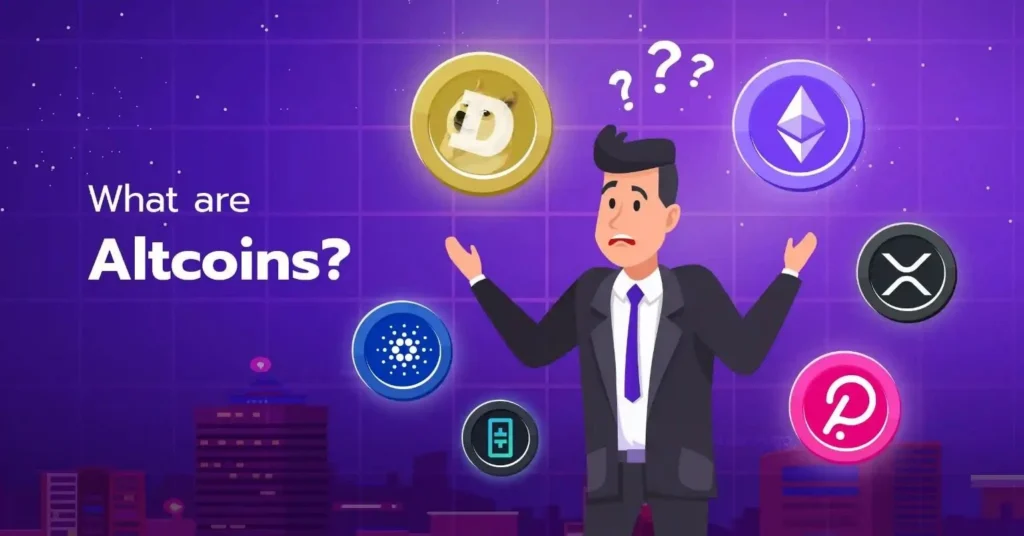
- Ethereum (ETH): Ethereum enhanced support for blockchain-based computer programs known as smart contracts.
- Tether (USDT): A stablecoin whose value is tied to the US dollar. It is still one of the most famous ones.
- BNB (BNB): BNB is the coin for the BNB Smart Chain (BSC), which Binance, the biggest cryptocurrency exchange in the world, created.
History of Altcoins
When Bitcoin first came out in January 2009, no one knew if it would be successful in the long run. eCash, B-money, Bit Gold, and Hashcash were all projects that came before Bitcoin. They all had an impact on the creation of Bitcoin, which makes the Bitcoin network both revolutionary and evolutionary. But none of them really took off.
A lot of important altcoins came out in the next few years, and many of them are still around today. Several also made it possible for other projects to happen. Today, we are going to look at some of the most important early altcoins.
- Namecoin (2011): The Namecoin blockchain was the first code fork of Bitcoin. Its main goal is to resist censorship by offering decentralized domain name servers (DNS).
- Litecoin (2011): Litecoin was also made by splitting off from Bitcoin’s code. Its goal was to fix problems with Bitcoin’s speed and cost.
- Peercoin (2012): It was the first blockchain to use proof of stake (PoS) as a way to reach a decision. In 2022, Ethereum switched from proof of work (PoW) to proof of service (PoS) as its way of confirming transactions.
How Altcoins Work?
Altcoins and Bitcoin both use blockchain technology to work, which means they are based on the same basic ideas. Thousands of nodes around the world back a decentralized digital record called blockchain. These nodes check that transactions are correct and add them to the blockchain as blocks. Altcoins are based on a similar idea to Bitcoin, but they have their features that get around Bitcoin’s problems.
Different Types of Altcoins
It’s not as easy as saying “anything other than Bitcoin” to answer the question, “What is an altcoin?” Another way to group altcoins is by what they are meant to be used for, the blockchain technology they use, or their place in the market. As an example, smart contract systems are run by altcoins like ETH and SOL. Monero (XMR) and Dash (DASH), on the other hand, work more like Bitcoin. They both have a payment network and privacy features. We’ll talk about some of the most important groups below. But since there are more than 9,000 cryptocurrencies in use, there are a lot of altcoins that fit into more than one category.
Smart Contract Platforms
There are blockchain networks that can run conditional programs, and some of them are used as smart contract platforms. A lot of different types of online games, including web3 games, use smart contracts to keep everything running smoothly. Each one uses a different cryptocurrency to power blockchain transfers based on how much computing power is needed for each one.
Stablecoins
Another asset’s value is tracked via a stablecoin. Fiat currencies, like the US dollar, are often these assets. Stablecoins are very important to the cryptocurrency market because their value stays the same compared to the traditional currency that they are pegged to. For cryptocurrency investors, this stability provides a haven in between trades and facilitates simple transactions. US Dollar Coin (USDC) is the second largest stablecoin, after Tether (USDT).
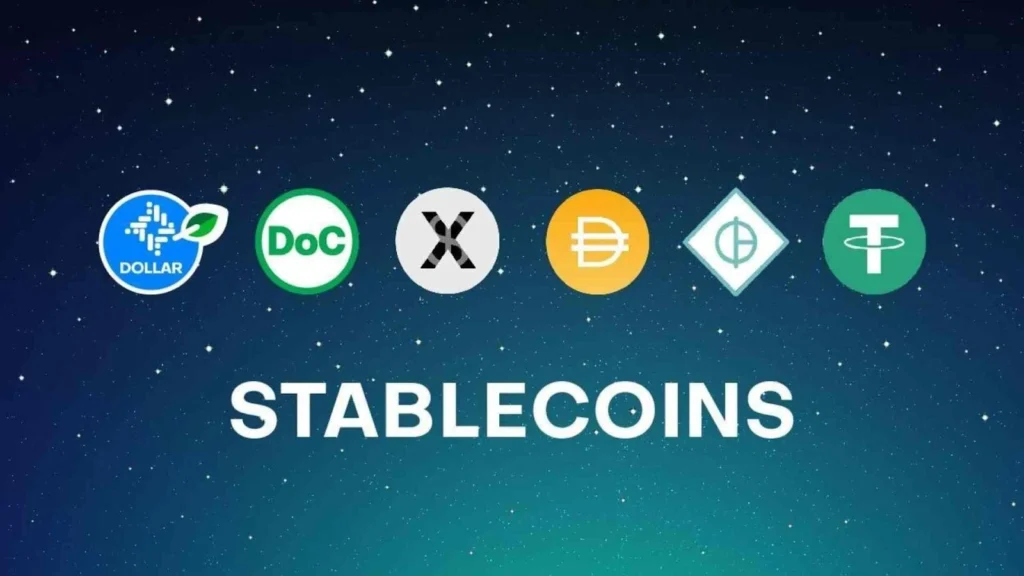
All of the tokens’ value comes from cash or cash alternatives. Tether, for instance, backs its USDT token with cash, US government bills, and other things. Circle uses Blackrock as its reserve provider. Circle is the firm behind USD Coin. When it comes to other important currencies, both stablecoin issuers also provide stablecoins for those currencies. For example, Tether has EURT, which is tied to the Euro. The EURC from Circle also follows the Euro.
Privacy Coins
A lot of public blockchains, like Bitcoin and Ethereum, don’t keep anything secret. Wallet names are used as identities in crypto networks. There are, however, times when people can connect your wallet address to your real-life name. This could pose privacy and security risks. The market for private coins has grown since every transaction can be seen on a blockchain explorer.
Monero (XMR), which came out in 2014, is the best of these. Different privacy coins use different methods, but most of the time, they hide the transaction numbers or addresses. In the case below, the amounts of the transactions are hidden so that only the people who took part in them can see them.
Utility Tokens
Utility tokens can be used for many things, but they only have one use in a certain system or blockchain. Like, ETH is a utility coin that is used to pay for the computer power that transactions on the Ethereum blockchain need. To give small gifts to makers, posters, or commenters through the Brave browser, you can use the Basic Attention Token (BAT).
Uniswap (UNI) and Abitrum (ARB) are two other examples of utility tokens. Holders of these tokens can vote on ideas because they are governance tokens. The value of UNI tokens went up by 50% in just 24 hours after a suggestion was made to let holders of UNI tokens share in the profits from the Uniswap decentralized exchange.
Tokens for Decentralized Finance (DeFi)
Tokens used in decentralized finance applications, like loan and borrowing protocols and decentralized exchanges, are called “DeFi tokens.” There is some overlap with utility tokens, though. The main difference is that DeFi tokens focus on a certain type of benefit (DeFi). DeFi tokens can be used for many things, such as utility tokens, staking tokens, and control tokens.
As an example, the DeFi token Lido Staked Ether (STETH) just made it into the top ten coins. The Lido protocol uses smart contracts to trade staked ETH for liquid tokens that can be spent, sold, or used as collateral. To use or sell staked ETH, it must first be unstacked.
Meme Coins
The class clowns of the cryptocurrency world are meme coins. They’re fun and well-liked, but they’re not always the best long-term bet. Dogecoin is for people who like Shiba Inus, and PEPE, which is named after Pepe the Frog, is known for being very chill. The Shiba Inu and the Solana-based BONK token are two more examples of joke coins that are based on dogs.

Even though meme coins and tokens are considered silly, that doesn’t mean they won’t last or can’t make real money. A lot of Dogecoin millionaires don’t agree.
Bitcoin vs. Altcoins: The Key Differences
| Key Areas | Difference |
| Block Time | Bitcoin takes 10 minutes to produce a block, while Altcoins like Litecoin have shorter block times, generating blocks every 2.5 minutes. |
| Consensus Mechanism | Bitcoin primarily uses Proof-of-Work (POW) for block validation, an energy-intensive method. Some Altcoins implement Proof-of-Stake (PoS), known for less energy consumption and faster transaction validation time. |
| Smart Contract Capabilities | Altcoins like Ethereum pioneered smart contracts, enabling the execution of programmable agreements. Bitcoin is just in the beginning stages in this area. |
| Diversity of Features | Altcoins are improvised versions of Bitcoin. They offer unique features, such as enhanced scalability, privacy, or interoperability. |
| Appeal to Different Users | Altcoins tweak the rules to cater to various user preferences and needs. |
Should You Invest in Altcoins?
Bitcoin may keep going up. Some altcoins, on the other hand, may give you better results over time. Altcoins are another way to spread out your crypto holdings and get gains at different times. Altcoins’ prices move at different times than Bitcoin’s. This is what the word “altcoin season” means: the time of year when the most valuable altcoins gain more value than Bitcoin.
If you want your stock to grow more often, allocate some of it to altcoins. This is because altcoins may experience price increases at different times than Bitcoin. News stories can also change the prices of cryptocurrencies at different times. For instance, UNI’s recent 50% gain in just 24 hours was much better than Bitcoin and most other cryptocurrency.
High Growth Potential
Bitcoin is projected to keep going up in value, though future returns may not be as high as in the early days when it went from pennies to over $1,000 and then to almost $70,000. If you pick the right altcoins to buy, even smaller but more promising ones might still give you a chance to make money.
Special Use Cases
Some cryptocurrencies make things better. For example, Ethereum makes it possible for decentralized banking apps to grow. But Ethereum is slower and costs more than many other blockchains, which gives networks like Solana chances to grow. In the same way, Bitcoin is very slow and expensive because blocks take 10 minutes to process. Peer-to-peer networks like Kaspa could find a use in smaller payment apps because they are quick and don’t cost much.
Altcoins Pros and Cons
| Pros | Cons |
| Powered by a young technology, Blockchain, its possibilities are tremendous | The prices of Altcoins are highly volatile. A section is still doubtful about the future of Altcoins |
| Altcoins offer unique functions and governance rights | Certain Altcoins are complicated, so are not easy to understand |
Future of Altcoins
Altcoins haven’t gone as far as they need to go yet, and we don’t know how far they will go. They will have a bright future with lots of chances to get better. Most altcoin projects would include more technical progress. These are already happening, as coins that are meant to support AI are already on the market.
Many of these altcoin projects will make them more secure, private, scalable, and able to work with other coins, but that won’t change how volatile the market is.
Alternative coins will always be cheaper than the coins that run their parent chains, which will make more buyers want to buy them. None of them are sure to be big enough to take over Bitcoin, though, either in the short or long run.
FAQs
What are altcoins in crypto?
Any cryptocurrency that isn’t Bitcoin is called an altcoin.
What are the top 5 altcoins?
To order by market value, the top 5 altcoins are Cardano (ADA), Solana (SOL), Ethereum (ETH), and BNB. Stablecoins, on the other hand, are tied to the value of another currency, like the US dollar, and are not on this list. Tether (USDT) and US Dollar Coin (USDC) are the two most popular stablecoins.
Is Solana an altcoin?
Solana is an alternative coin. Most of the time, all cryptocurrencies other than Bitcoin are called “altcoins.”
Is Ethereum an altcoin?
No, Ethereum is not a main coin. Most of the time, all cryptocurrencies other than Bitcoin are called “altcoins.”
Conclusion
Altcoins give you a chance to grow your crypto portfolio and offer growth possibilities that may be less likely with Bitcoin. While each has its use case, it’s important to look into how fast each is being adopted and what problems it might face before making a long-term investment.
Because crypto prices change so quickly, they can also be used for trading. This is especially true for meme coins, whose prices can change by 20% or more in a single trading day.