
Venture investors and initial public offerings (IPOs) are two common ways for traditional businesses to get money. So, what is ICO stand for? This is usually done through an initial coin offering (ICO) in the world of crypto and blockchain firms.
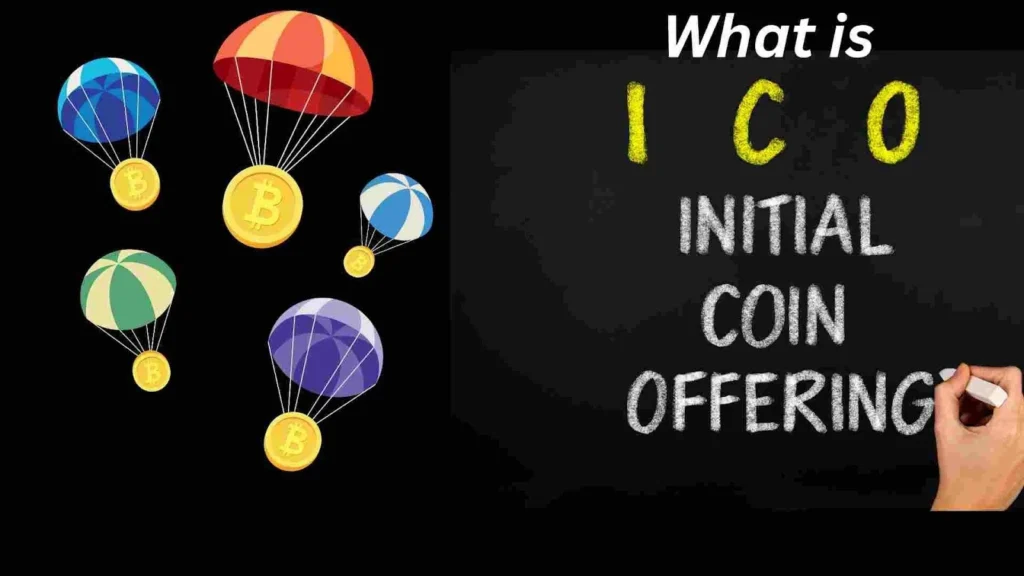
ICO means initial coin offering is a type of crowdfunding that is used to raise money. A blockchain or crypto company gives early investors native tokens of its project in return for more well-known crypto like ETH. This guide will start by explaining what an initial coin offering (ICO) is and how it works. Then, we will help you choose the best crypto ICO available.
Key Takeaway: What Is ICOs?
To understand whats an ICO in crypto, keep these points in mind:
ICOs are mostly used to sell cryptocurrency tokens in order to raise funds for new blockchain projects. Normal investors might not want to take the chance of putting money into these kinds of projects, so crypto companies raise money from the public instead.
- In addition to raising money, initial coin offerings (ICOs) aim to foster the development of an early community of supporters for the project and its native currency.
- Initial coin offerings are not regulated, which means that there is a significant risk associated with investing in them, in contrast to IPOs.
- It is crucial to mention that it is probable that you will need to have some crypto in order to participate in an ICO. Most of them will only take cryptocurrencies like Bitcoin and Ethereum or stablecoins like USDT.
- Finally, you should learn more about the ICO, its founders, and how it will be used in the future in comparison to a normal purchase.
How to Participate in an ICO?
We now have a short answer to the question, “How does an initial coin offering work?” Let’s look at how to join one.
Step 1: Find and research an ICO
The first thing you need to do to join an ICO is to find one. To stay on top of the hottest pre-sale chances, check out our list of the best crypto ICOs, which are always being updated. You can also find them in ICO calendars on sites like CoinMarketCap and others that you can trust.
Once you find an interesting ICO, you should learn as much as you can about it. Please read the project report, learn about the team behind it, and see what other people are saying about it on social media. In the end, you want to do everything possible and be very sure of yourself before spending.
Step 2: Ensure you have crypto in a wallet
Before you invest, make sure you have a cryptocurrency wallet and the appropriate cryptocurrency to participate. This is likely to be ETH, BTC, SOL, USDT, or other stablecoins like them.
You can buy these through your centralized or non-custodian wallet if you don’t already have any of them.
Step 3: Invest and receive your ICO tokens
Now that you have the crypto you need, you can put money into the ICO. After that, you’ll usually get the token after the ICO is over. You can then store it in your wallet or sell it on an exchange.
How to Prepare to Launch an ICO?
If you want to start your ICO but aren’t sure how to do it, there are some important steps you need to take and things you should think about. For more ideas on how to plan the lead-up to your token sales, check out ICOs that are coming up soon.
Develop a Credible Team
Having a trustworthy team working on the project is crucial. Investors will look at the original team and any notable accomplishments or red flags that might be present. Because of this, you should make sure that the people you pick to work on the project have a lot of experience with crypto and a good track record.
Develop Tokenomics
Second, it’s important to make sure that the project’s tokenomics are clear and appealing to investors. You will need to think about the total amount of supply and how much of it goes to each part of the job. For instance, how much will be set aside for a possible airdrop, advertising, listing on exchanges, and even prizes for staking?
So that investors can get excited about the token and make sure there is a clear plan for what will happen.
Create Marketing Buzz
Getting people excited is the most important part of starting an ICO. These days, a lot of ICOs have been joke coins that aren’t very useful but have a big community. Like Bonk and Pepe, who both have large social media followings, this popular following has helped their prices rise by over 10,000% since they first came out. In more standard projects, the community is built around staking or using tokens for useful things.
Types of ICO Token Sales: 6 Different Models
It’s important to keep in mind that initial coin offers come in a number of different forms.
Dutch Auctions
A Dutch auction is a popular choice. The auctioneer usually starts with a high price and slowly lowers it until someone is ready to accept a lower price. Because of this, it’s also called a “descending price auction,” and the business usually lets the market decide the price. Once all the bids are in, they are ranked from highest to lowest, and the sale can begin.
Reverse Dutch Auctions
On the other side is a reverse Dutch auction, where the price of the tokens is set after the sale and goes up slowly over time. This model works well for ICO projects that make people afraid of losing out (FOMO).
Fair Launches
A fair start, on the other hand, lets everyone buy all the tokens at the same price instead of auctioning them off. This early stage doesn’t favor anyone; all buyers have an equal chance to own the token.
Collect and Return
There is a set amount that people will contribute in a collect and returns model. However, if a smart contract is used, the contributions can go over the original agreed amount. When the sale is over, all the money that was raised is adjusted, and buyers are given tokens. Any gap between the goal amount and the amount raised is then given back to the people who took part.
Dynamic Ceiling
The dynamic ceiling mixes the above models. At set times, it works, and there are small hard caps at each step. Investors can only pay up to a certain amount. Any deposits over that amount will be turned down. In the end, this means that you will have to make more than one transaction in order to spend more than the ceiling.
Uncapped Auctions
Last but not least, an uncapped model lets the user buy the ICO token at a set price using either crypto or fiat currencies. They are better for people who buy early and worse for people who buy later.
Examples of ICO Successes
Your question about what ICO stands for has been answered better. Let’s now look at some examples of great ICO projects to show you how they work in real life.
- Ethereum: Easily the most well-known example of a successful ICO. From its ICO in 2014, which earned $18 million, it grew to become the world’s second-largest cryptocurrency with a market value of over $400 billion.
- Binance Coin: An ICO on Binance is said to have earned $15 million to make BNB coins. Many people see Binance as the biggest centralized exchange (CEX) in the world. At that time, its token was used to pay trading fees.
What Are the Risks of Investing in ICOs?
ICOs are seen by many crypto traders as an early chance to get into projects with a lot of promise. However, investing in ICOs comes with some risk.
Many risks come with dealing with any money. For cryptocurrencies, though, these risks are usually bigger because they are more volatile, and there aren’t as many rules about them. These are some of the biggest risks.
Scam projects
Due to the large number of scam ICOs that have been around over the years, many buyers are afraid of falling for one. They sell the idea of a revolutionary new cryptocurrency, but it never comes to life. This is known as a “pump and dump” or “rug pull.” Yahoo Finance says that Bitconnet, which ran a $3.45 billion Ponzi scam, is a well-known example.
Market volatility
ICOs are very volatile, and their prices often change a lot right after they start. As we saw with Ethereum, the value of digital goods can rise quickly and stay high. But some people may fall and never be able to get back up.
No regulation
In the initial coin offering (ICO) market, there are no rules or authorities in place to make sure that projects are acting honestly. You need to make sure you do your study because there is no other choice if something goes wrong.
Conclusion
Once you’re done reading this guide, you should be able to answer “What is an ICO crypto?” and know both its pros and cons. ICOs are good for both buyers and the project they’re for. Investors can look over and get involved in projects that could change the game early on, and startups can raise money and build a group of followers.
Even though there are a lot of risks involved, buying in an ICO like Ethereum could change your life. Before you decide to take part in any crypto donation rounds, make sure you do your research.
FAQs
Define ICO?
An initial coin offering, or ICO, is a way for blockchain companies to get money by selling tokens to early investors at a set price.
What does ICO stand for
ICO stands for initial coin offering.
What is an example of an ICO?
The most popular ICO is Ethereum. It became the second-largest cryptocurrency in the world after raising $18 million in 2014.
What is the purpose of an ICO?
An initial coin offering, or ICO, is a way to get money to build or grow a blockchain or crypto project.